Write an essay about Korea and get a chance to win online gift card.
Interested people please do participate.
More info check below link
http://www.korea.net/NewsFocus/Society/view?articleId=130173
Source:korea.net
Showing posts with label Republic of Korea. Show all posts
Showing posts with label Republic of Korea. Show all posts
Friday, October 2, 2015

Sunday, May 4, 2014

Friday, July 27, 2012
Korean cuisine expected to be globalized at faster pace
Korean cuisines will be globalized at the faster pace, said a leading “bulgogi” cuisine restaurant owner, who has been to New York to participate in the 2012 International Franchise Expo recently.
Bulgogi and bibimbab are no more strangers to foreigners, said Jung In-tae, head of the Bulgogi Brothers, a franchise of bulgogi, a dish that usually consists of marinated barbecued beef, chicken or pork.
Jung said many foreign business partners expressed their hope to “take the similar cuisines they enjoyed when they came before” during their revisit to Korea. “This is the case that Korean food is addictive enough to attract foreigners throughout the world.”
Jung asked Koreans running Korean restaurants overseas to understand about the taste and flavor of Korean dishes and try to introduce them to foreigners.
Jung also said he had found Korean dishes have potential to be globalized in the Expo, after seeing the interest of foreigners.
Source:Korea Times
Bulgogi and bibimbab are no more strangers to foreigners, said Jung In-tae, head of the Bulgogi Brothers, a franchise of bulgogi, a dish that usually consists of marinated barbecued beef, chicken or pork.
Jung said many foreign business partners expressed their hope to “take the similar cuisines they enjoyed when they came before” during their revisit to Korea. “This is the case that Korean food is addictive enough to attract foreigners throughout the world.”
Jung asked Koreans running Korean restaurants overseas to understand about the taste and flavor of Korean dishes and try to introduce them to foreigners.
Jung also said he had found Korean dishes have potential to be globalized in the Expo, after seeing the interest of foreigners.
Source:Korea Times
Tuesday, July 3, 2012
2012 K-POP CONTEST

2012 K-POP CONTEST
Song & Dance
Winners will be invited to Korea!
Attend the program and collect your free T-shirt!
I.To Participate(* Non Koreans Only):
1.Stage 1: Online
Guidelines :
-Reproduce the SONG AND/OR COVER DANCE CHOREOGRAPHY of your favorite Korean Pop artist
-Post your User Created Content (UCC) of the song/cover dance onhttp://www.coverdance.org
Deadline: Tuesday July 31st, 2012
Selection: 10 teams will be shortlistedto participate in the semi-final
2.Stage 2: Semi-final in New Delhi
Date: SaturdayAugust 25th, 2012; 5pm
Venue: JNU Auditorium-I, New Delhi
Prize for winners at the Semi-finals:
Gold Prize A round-trip ticket to Korea to participate at the Final, ‘Hallyu Dream Festival’
LG laptop
Silver Prize SamsungGalaxy Note
Bronze Prize LG LCD TV
Participation Prize Samsung mobile phone
3.Stage 3: Final in Korea
(1)Hallyu Dream Festival
Date: Friday September 21st, 2012
Place : Gyeongju, Korea
(2) K-Pop World Festival
Date : Saturday October 27th, 2012(may change)
Place : Changwon, Korea
II.Contact:
-For details, visit http://ind.mofat.go.kr/english/as/ind/mission/notice/index.jsp
andhttp://www.coverdance.org
- JooheeAhn:augustjha@yahoo.com / +91-11-4200-7071
- Ye-Eun Kim:kye8898@nate.com
Saturday, June 2, 2012
Real taste of hallyu for Europeans
By Yun Suh-young
Sixty-four members of the Korean Connection, the largest “hallyu” or Korean wave fan club in Europe, are in Korea for a two-week stay to get a hands-on experience of the culture here. The group came to Korea without any financial support from the government and paid for the trip out of their own pockets.
After traveling to various tourist attractions, including the Yeosu Expo, on Wednesday they participated in an event at the Korea Tourism Organization (KTO) to make and taste Korean food.
“We prepared the Korean food-experiencing event especially for the fan club. We were told by the manager of the Paris branch of our organization that the club members would be coming so we invited them to the organization to try making Korean food,” said an official from the KTO.
The hallyu fans participated in making gimbap (a seaweed and rice roll) and sliced ddeok (rice cake), and tasted traditional snacks while visiting the tourism office. The Korean Connection, organized in 2010 by Maxim Paquet, a French national, is an active Korean culture fan club which arranges various concerts, festivals and events related to Korea and Korean culture. The group basked in the spotlight last year by holding a flash mob in front of the Louvre Museum to request SM Entertainment add an extra Paris concert by its K-pop singers. It has a 50-member organizing committee and about 6,000 regular members.
“This is my second time in Korea and I came to experience things and go to places that I couldn’t go the last time I came. I want to go to places like noraebang (karaoke), and jjimjilbang (dry sauna),” said Sanae Abed, a member of the Korean Connection, during a phone interview Friday.
“I’ve also been longing to visit Busan and I finally went to Haeundae Beach there last week. I also tasted a lot of Korean food, visited royal palaces, and the N Tower on Mt. Nam. We’re going to see Music Bank (K-pop music TV show) this evening,” she said.She became interested in Korean culture through movies.
“I saw the movies Old Boy and Mother, and Korean dramas like Full House. It was the Korean movies that first triggered my interest in Korean culture so from then on I started watching dramas. I then moved on to K-pop,” said Abed.
“There are not many channels through which we can access Korean culture in France. Sometimes the movie theaters show Korean films but not so often. We can see dramas through the Internet, though. There are stores that sell K-pop CDs but these are few too,” she said. Those who actively sought to know more about Korea like Abed became members of Korean Connection. “I heard about the fan club on the Internet and got in touch with the president. I told him how interested I was in Korean culture so he asked me to join. Now I’m in charge of communication and organization of activities such as festivals and concerts,” she said. Hallyu seems to be spreading quickly, according to Abed. “Two years ago, there were not so many members and we didn’t hold many concerts but now we hold three concerts a year. The hallyu fever is all over Europe,” she said.
Source:Korea Times
Saturday, April 21, 2012
Pics of Korea
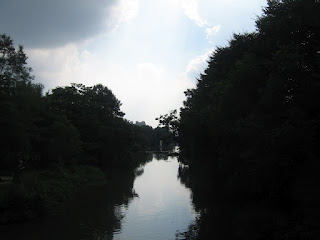
It has been long time I have had not posted anything due to my busy schedule.From now on I will try to make my blog alive as much as possible.To restart with I am posting some pics which were taken randomly.Korea has lots of exciting places to explore.I love to take snaps of mountains,landscapes,daily activities etc. This will be starting part....more on the way :)
Some of the photo credit goes to my friend Jo




Wednesday, August 17, 2011
Korea charms Imphal youths

Free Korean Medical Treatment at Imphal :: August 09 - 15, 2011
The visit of 11-member team from Seoul has come down to dispense free medical treatment through acupuncture, medicines, haircuts and gifts have been a boon to many Korean followers in Imphal.
The Telegraph's Korea charms Imphal youths carried a report on the visit which reminds us of the various other impacts Korean has on our youths and society. Anjulika Thingnam wrote in her article 'Soaps, songs, stars: Manipur's Korea wave' that when Jeong Seok, 35, came to Imphal from the South Korean capital of Seoul recently to take part in a food festival, he felt completely at home. It happens this time too.
The article says that Pai Hyee Jou, a Korean painter, was stunned when Mapui, a young Manipuri girl, addressed her in fluent Korean. From dress to hairstyles youths of Imphal are a diehard fan of Korean styles.
Another article at Taipei Times writes, "Hairdressing salons are covered with headshots of Korean celebrities and offer a wide range of spiky, "Korean-style" cuts, which are hugely popular with young Manipuris of both sexes. Korean culture has entered deep into the life of Manipuris now.
Even films nowadays are influenced by Korean films and dramas. Oliver in his article 'The influence of Korean TV dramas' writes in length about it.
The article from The Telegraph writes, "Korean culture has always fascinated youths in Imphal. It has become fashionable for Manipuri boys and girls to sport Korean haircuts and dresses.

Most video parlours in the city have more Koreans films than Hollywood or Manipuri films and the youths are more familiar with Korean actor Rain than Shah Rukh Khan". Many youths are happy and overwhelmed by this visit and hope this would provide a good relation between the two people.
The article reports Cho Tae Soo saying that this is their first visit. They are happy with the response. Their trip and the people's response would improve the relationship between Manipur and Korea.
Source:www.e-pao.net
Thursday, July 21, 2011
Korean culture spreads across globe
Sinlung Says: Korea is weilding its soft-power, earlier it was thought that Korean culture just spanned across some space in Asia.Now, Korean Culture is not spreading its wings but showing muscle. It used to be Hollywood, now its All For Korea.
This has had very bad and good influence especially in Northeast India, which has a huge following.Starting from effiminate boys with girly looks and make-up with colored hair which makes me want to puke...It's always bad when one culture invades the other, it will surely take time for the youths in Northeast India to digest the foriegn 'Korean' culture. Lets hope...Northeast Boys don't turn up gays.
By Veramalla Anjaiah
Frontlines: Famous Korean boyband SHINee performs at the Korea-Indonesia Friendship Concert at Tennis Indoor Senayan in Jakarta. JP/Ricky Yudhistira Seoul/Jakarta, Jul 19 : Some people call it a “virus”, others an “addiction”. The media frequently portrays it as an unprecedented phenomenon that started in Asia and spread rapidly from continent to continent, even to remote places people had never imagined.
This phenomenon is Hallyu or the Korean Wave.
The term Korean Wave was coined by a Chinese journalist in 1999 to describe the growing popularity of Korea’s pop culture in East and Southeast Asia. It has now captured the hearts and minds of millions of people across the globe.Many have the mistaken impression that the Korean Wave consists of only two elements: Korean films and K-Pop, which takes its name from Japanese pop or J-Pop.But, there is more to Korean Wave than that. It is a multifaceted giant differing from country to country. For example, pop music and TV dramas, which earned Korea the moniker the Hollywood of the East, were the main foundations of the Korean Wave in communist China and capitalist Taiwan. In Hong Kong, Korean films are at the core of the “wave” there.
In Japan, it was romantic soap opera Winter Sonata that triggered the Korean Wave. In Southeast Asia, it was a mix of it all that made Korean culture popular.Now, the Korean Wave is not just confined to TV dramas, films and music, but is assertively expanding to things like dance, sculpture, painting, cuisine, computer games, fashion, plastic surgery, cosmetics, cell phones, electronics, tourism and language, to name a few.
“Hallyu is a quite complex phenomenon, with multiple local trajectories and transforming tendencies,” Park Jung-sun, an associate professor from California State University, wrote in Insight into Korea.
It also has had a domino effect. TV dramas, films and music attract tourists, who in turn bring billions of dollars into the country. According to one estimate, the Korean Wave could generate around US$4 billion in sales this year. And, every year it grows.Right now Korea is enjoying a double boom in the economic and cultural fields thanks to continuous economic reforms, Korean President Lee Myung-bak’s green growth concept and the Korean Wave.
Like Indonesia, Korea was severely affected by the Asian financial crisis in 1997 and became a patient of the IMF. Korea recovered fast and is enjoying an unprecedented economic boom, with 6.2 percent economic growth in 2010 and more than $305 billion in forex reserves.et during past difficult times, Korean artists and filmmakers worked hard to create a cultural renaissance.
“Korean artists put a lot of energy in creating attractive and qua-lity cultural products. They tried so many times. But in the end they succeeded. You see the Korean Wave, which is spreading all over the world,” Korean Tourism Organization president Charm Lee told The Jakarta Post recently in Seoul.The signs of a cultural boom within Korea can be seen in most towns and cities. Many cultural events — both international and local — have taken place in recent years.
“It’s a new trend in Korea. In six years Korea has changed a lot in the cultural field. Maybe we are economically well off. That’s why we are now able to show interest in cultural aspects,” Ray Han, marketing manager of the famous Nanta theater, told the Post.Attempting to capitalize on the growing popularity of Korean culture, the Korean government has organized more than 35 different festivals throughout the year. Among them was the Hi Seoul Festival, which featured 47 teams from 11 countries, including Indonesia. Indonesia’s Ciacia people from Southeast Sulawesi performed a traditional dance at the festival in May.
“There is no shortage of performances in Seoul. We have daily shows of Nanta and Miso [musical dance-dramas] and so many others in Seoul,” said Jongkil Lee, a manager of the International Exchange Promotion Association.
Duty: Members of the Gyeongbokgung guard participate in the changing of the guard in Seoul. The royal palace is a major tourist attraction in Seoul.This cultural renaissance is reaping enormous economic benefits for Korea. Its exports to several countries, including Indonesia, have been growing in the double digits. Last year alone, Korea exported more than $10 billion worth of goods just to Iraq and Saudi Arabia. In several Southeast Asian countries, the growth rate of exports was more than 100 percent. In 2010, Korean exports to Southeast Asia’s largest economy, Indonesia, reached $7.7 billion, a huge increase from $4.74 billion in 2009.
Main players — film artists and singers — in the Korean Wave are now the highest paid artists in Asia.“They are like gods. It is very difficult to meet them,” Jongkil said.Two recent events encapsulated the magic of the Korean Wave. The first was in Paris on May 1. More than 300 French teenagers staged a demonstration in front of the Louvre demanding a second show in Paris of SM Town Live, a K-Pop concert with famous Korean singers from groups like TVXQ, Super Junior, SHINee and Girls’ Generation.All 6,000 tickets for the June 10 show were sold out in 15 minutes on April 26.“For a moment, I was going to cry because I saw that it was full,” a protester told MBC TV.
The popularity of Korean singers has raised the eyebrows of many, even in Korea.“This is really amazing and surprising. I never imagined that our singers were that popular in Europe,” ASEAN-Korea Center secretary-general Ambassador Young Jai-cho told the Post recently in Seoul.The organizers bowed to popular demand and agreed to have another show on June 11. Again, the tickets sold out, but this time in 10 minutes through online sales.
Why are some French youth crazy about this distant culture from Asia?
Feline: Korea’s all-female percussion group, Drum Cat, participate in the opening of the Korean Tourism Organization’s office in Jakarta on June 22. JP/Veeramalla Anjaiah
Feline: Korea’s all-female percussion group, Drum Cat, participate in the opening of the Korean Tourism Organization’s office in Jakarta on June 22. JP/Veeramalla Anjaiah
“K-Pop singers are complete artists and entertainers. They can sing, they can dance and they look very trendy. This is the main difference with French singers who mainly prefer to focus on the lyrics and almost never dance. Many of them… don’t really care about their looks,” Maxime Paquet, president of a French fan club called Korean Connection, told Korea magazine last month.The second event was in India’s remote province of Manipur. It is so remote even many Indians do not know much about Manipur and its culture. The British Broadcasting Corporation (BBC) and the French news agency Agence France-Presse recently reported that the Korean Wave had struck the region. Street vendors sell DVDs of Korean soap operas and films and CDs of K-Pop stars. Hair salons offer “Korean-style” cuts. Manipur’s capital, Imphal, and other towns are even connected to Korean global TV channels Arirang TV and KBS World.
Source: The Jakarta Post and Sinlung
This has had very bad and good influence especially in Northeast India, which has a huge following.Starting from effiminate boys with girly looks and make-up with colored hair which makes me want to puke...It's always bad when one culture invades the other, it will surely take time for the youths in Northeast India to digest the foriegn 'Korean' culture. Lets hope...Northeast Boys don't turn up gays.
By Veramalla Anjaiah
Frontlines: Famous Korean boyband SHINee performs at the Korea-Indonesia Friendship Concert at Tennis Indoor Senayan in Jakarta. JP/Ricky Yudhistira Seoul/Jakarta, Jul 19 : Some people call it a “virus”, others an “addiction”. The media frequently portrays it as an unprecedented phenomenon that started in Asia and spread rapidly from continent to continent, even to remote places people had never imagined.
This phenomenon is Hallyu or the Korean Wave.
The term Korean Wave was coined by a Chinese journalist in 1999 to describe the growing popularity of Korea’s pop culture in East and Southeast Asia. It has now captured the hearts and minds of millions of people across the globe.Many have the mistaken impression that the Korean Wave consists of only two elements: Korean films and K-Pop, which takes its name from Japanese pop or J-Pop.But, there is more to Korean Wave than that. It is a multifaceted giant differing from country to country. For example, pop music and TV dramas, which earned Korea the moniker the Hollywood of the East, were the main foundations of the Korean Wave in communist China and capitalist Taiwan. In Hong Kong, Korean films are at the core of the “wave” there.
In Japan, it was romantic soap opera Winter Sonata that triggered the Korean Wave. In Southeast Asia, it was a mix of it all that made Korean culture popular.Now, the Korean Wave is not just confined to TV dramas, films and music, but is assertively expanding to things like dance, sculpture, painting, cuisine, computer games, fashion, plastic surgery, cosmetics, cell phones, electronics, tourism and language, to name a few.
“Hallyu is a quite complex phenomenon, with multiple local trajectories and transforming tendencies,” Park Jung-sun, an associate professor from California State University, wrote in Insight into Korea.
It also has had a domino effect. TV dramas, films and music attract tourists, who in turn bring billions of dollars into the country. According to one estimate, the Korean Wave could generate around US$4 billion in sales this year. And, every year it grows.Right now Korea is enjoying a double boom in the economic and cultural fields thanks to continuous economic reforms, Korean President Lee Myung-bak’s green growth concept and the Korean Wave.
Like Indonesia, Korea was severely affected by the Asian financial crisis in 1997 and became a patient of the IMF. Korea recovered fast and is enjoying an unprecedented economic boom, with 6.2 percent economic growth in 2010 and more than $305 billion in forex reserves.et during past difficult times, Korean artists and filmmakers worked hard to create a cultural renaissance.
“Korean artists put a lot of energy in creating attractive and qua-lity cultural products. They tried so many times. But in the end they succeeded. You see the Korean Wave, which is spreading all over the world,” Korean Tourism Organization president Charm Lee told The Jakarta Post recently in Seoul.The signs of a cultural boom within Korea can be seen in most towns and cities. Many cultural events — both international and local — have taken place in recent years.
“It’s a new trend in Korea. In six years Korea has changed a lot in the cultural field. Maybe we are economically well off. That’s why we are now able to show interest in cultural aspects,” Ray Han, marketing manager of the famous Nanta theater, told the Post.Attempting to capitalize on the growing popularity of Korean culture, the Korean government has organized more than 35 different festivals throughout the year. Among them was the Hi Seoul Festival, which featured 47 teams from 11 countries, including Indonesia. Indonesia’s Ciacia people from Southeast Sulawesi performed a traditional dance at the festival in May.
“There is no shortage of performances in Seoul. We have daily shows of Nanta and Miso [musical dance-dramas] and so many others in Seoul,” said Jongkil Lee, a manager of the International Exchange Promotion Association.
Duty: Members of the Gyeongbokgung guard participate in the changing of the guard in Seoul. The royal palace is a major tourist attraction in Seoul.This cultural renaissance is reaping enormous economic benefits for Korea. Its exports to several countries, including Indonesia, have been growing in the double digits. Last year alone, Korea exported more than $10 billion worth of goods just to Iraq and Saudi Arabia. In several Southeast Asian countries, the growth rate of exports was more than 100 percent. In 2010, Korean exports to Southeast Asia’s largest economy, Indonesia, reached $7.7 billion, a huge increase from $4.74 billion in 2009.
Main players — film artists and singers — in the Korean Wave are now the highest paid artists in Asia.“They are like gods. It is very difficult to meet them,” Jongkil said.Two recent events encapsulated the magic of the Korean Wave. The first was in Paris on May 1. More than 300 French teenagers staged a demonstration in front of the Louvre demanding a second show in Paris of SM Town Live, a K-Pop concert with famous Korean singers from groups like TVXQ, Super Junior, SHINee and Girls’ Generation.All 6,000 tickets for the June 10 show were sold out in 15 minutes on April 26.“For a moment, I was going to cry because I saw that it was full,” a protester told MBC TV.
The popularity of Korean singers has raised the eyebrows of many, even in Korea.“This is really amazing and surprising. I never imagined that our singers were that popular in Europe,” ASEAN-Korea Center secretary-general Ambassador Young Jai-cho told the Post recently in Seoul.The organizers bowed to popular demand and agreed to have another show on June 11. Again, the tickets sold out, but this time in 10 minutes through online sales.
Why are some French youth crazy about this distant culture from Asia?
Feline: Korea’s all-female percussion group, Drum Cat, participate in the opening of the Korean Tourism Organization’s office in Jakarta on June 22. JP/Veeramalla Anjaiah
Feline: Korea’s all-female percussion group, Drum Cat, participate in the opening of the Korean Tourism Organization’s office in Jakarta on June 22. JP/Veeramalla Anjaiah
“K-Pop singers are complete artists and entertainers. They can sing, they can dance and they look very trendy. This is the main difference with French singers who mainly prefer to focus on the lyrics and almost never dance. Many of them… don’t really care about their looks,” Maxime Paquet, president of a French fan club called Korean Connection, told Korea magazine last month.The second event was in India’s remote province of Manipur. It is so remote even many Indians do not know much about Manipur and its culture. The British Broadcasting Corporation (BBC) and the French news agency Agence France-Presse recently reported that the Korean Wave had struck the region. Street vendors sell DVDs of Korean soap operas and films and CDs of K-Pop stars. Hair salons offer “Korean-style” cuts. Manipur’s capital, Imphal, and other towns are even connected to Korean global TV channels Arirang TV and KBS World.
Source: The Jakarta Post and Sinlung
Tuesday, July 5, 2011
Tteok (떡)

Tteok (떡) is a class of Korean rice cakes made with glutinous rice flour by steaming. Normal rice flour can be used for some kinds of tteok. There are hundreds of different kinds of tteok eaten year round. In Korea it is customary to eat tteok guk (tteok soup) on New Year's Day and sweet tteok at weddings and on birthdays. It is often considered a celebratory food and can range from rather elaborate versions with nuts and fruits down to the plain-flavored tteok used in home cooking. Some common ingredients for many kinds of tteok are mung bean, red bean, and sweet red bean paste, Korean mugwort, jujube and other dried fruits, sesame seeds and oil, sugar, and pine nuts.
Types
Tteok are largely divided into four categories, such as "steamed tteok" (찌는 떡),"pounded tteok" (치는 떡), "boiled tteok" (삶는 떡) and "pan-fried tteok" (지지는 떡). The steamed tteok is made by steaming rice or glutinous rice flour in "siru" (시루), or a large earthenware steamer, so it is often called "sirutteok" (시루떡). It is regarded as the basic and oldest form of tteok. The pounded tteok is made by using a pounding board or mortar after steamed first. In making pan-fried tteok, the rice dough is flattened like a pancake and pan-fried with vegetable oil. The shaped tteok are made by kneading a dough with hot water which is usually shaped into balls.
Uniquenss
Tteok is not only one of Korea’s most symbolic foods, but also one of its oldest. Indeed, one of the things most fascinating about the displays is the mind-boggling diversity of sizes, shapes and colors in which tteok manifests itself. And the color is important, too — quite often, rice cakes are chosen for particular occasions thanks to their color and the role they play in Korea’s traditional yin-yang cosmology. Take, for instance, the white garae tteok commonly consumed sliced in tteokguk soup on New Year’s Day. New Year’s Day is traditionally considered a day with a lot of yang, or positive energy. White, too, symbolizes yang, hence the use of white garae tteok.
Other colors have their uses, too. Red, for instance, was commonly believed to be effective in scaring away ghosts, goblins and all other manners of things that go bump in the night. On Dongji, the winter solstice, red-bean porridge with rice cakes was served —the long night and its attendant beasties requiring culinary caution. Likewise, on the table of a first birthday, or dol, you’ll find rainbow-colored tteok. This symbolizes the hope that the child’s dreams will grow like a rainbow.
Thursday, June 9, 2011
Samgyeopsaal,삼겹살
*Samgyeopsal(*삼겹살*)* can be literally translated as “3 layered flesh”,In
Korea, the price of pork is much cheaper than beef, so this dish is enjoyed
by many people who can’t afford to buy good cuts of beef.The custom is such
that those who sit to dine together grill the meat themselves. Then they
help themselves with a full serving and relish their recipe over a long
sweet conversation.
Samgyeopsal is served with two different kinds of sauces, one of them being
a Korean chili paste called Saamjang,쌈장 and the other is based off
soybean,doenjang(된장) nicely blended with sesame oil,참기름 and other
ingredients. Other side dishes include onion salad in a typical Korean
style, sliced green chili peppers, sliced or finely chopped raw garlic,
kimchi(김치), and Soju(서주), a traditional Korean liquor which makes the dinner
even more delightful.It is even more delightful during the cold weather fire
heats up the evening.
A common way to consume *samgyeopsal* is to place a slice of the cooked meat
on a leaf of lettuce and ssamjang,쌈장 and to roll it up in the leaf and eat
it. It is usually called *sangchu-ssam* (상추쌈). Any combination of the
vegetable accompaniments mentioned above can be added to the roll according
to preference, the most popular is sliced garlic. Many people also add in
kimchi,김치 mushrooms, and grilled onions. Usually, different types of
baanchaan,반찬 are added. This is part of the reason why so many people enjoy
this food; they can make it the way they want.
There are various restaurants in Seoul and elsewhere where good and fresh
samgyeopsal are available.Some restaurants uses charcoal for the BBQ while
other uses the gas.Personally I prefer the one which is done with the
charcoal. Weekends are the best time to hang out with friends in a
restaurant and savor on samgyeopsal with lots of Soju. I know some good
restaurants in and around Nakseongdae(낙성대)
where the prices are cheap and
the meat are fresh.I use to go there along with my friends on weekends as it
was quite near from the University campus.
Korea, the price of pork is much cheaper than beef, so this dish is enjoyed
by many people who can’t afford to buy good cuts of beef.The custom is such
that those who sit to dine together grill the meat themselves. Then they
help themselves with a full serving and relish their recipe over a long
sweet conversation.
Samgyeopsal is served with two different kinds of sauces, one of them being
a Korean chili paste called Saamjang,쌈장 and the other is based off
soybean,doenjang(된장) nicely blended with sesame oil,참기름 and other
ingredients. Other side dishes include onion salad in a typical Korean
style, sliced green chili peppers, sliced or finely chopped raw garlic,
kimchi(김치), and Soju(서주), a traditional Korean liquor which makes the dinner
even more delightful.It is even more delightful during the cold weather fire
heats up the evening.
A common way to consume *samgyeopsal* is to place a slice of the cooked meat
on a leaf of lettuce and ssamjang,쌈장 and to roll it up in the leaf and eat
it. It is usually called *sangchu-ssam* (상추쌈). Any combination of the
vegetable accompaniments mentioned above can be added to the roll according
to preference, the most popular is sliced garlic. Many people also add in
kimchi,김치 mushrooms, and grilled onions. Usually, different types of
baanchaan,반찬 are added. This is part of the reason why so many people enjoy
this food; they can make it the way they want.
There are various restaurants in Seoul and elsewhere where good and fresh
samgyeopsal are available.Some restaurants uses charcoal for the BBQ while
other uses the gas.Personally I prefer the one which is done with the
charcoal. Weekends are the best time to hang out with friends in a
restaurant and savor on samgyeopsal with lots of Soju. I know some good
restaurants in and around Nakseongdae(낙성대)
where the prices are cheap and
the meat are fresh.I use to go there along with my friends on weekends as it
was quite near from the University campus.
Wednesday, May 25, 2011
Binayak Sen wins South Korean human rights Gwangju Prize
Civil rights activist Binayak Sen, recently freed on bail by the Supreme Court in a sedition case, has been honoured with the 2011 Gwangju Prize for Human Rights, South Korea's most prestigious award for those working on peace, democracy and justice in Asia.
The award was announced on Thursday by the 2011 Gwangju Prize Committee in Seoul.The prize, which carries a sum of $50,000 is awarded each year on May 18 - on the anniversary of the May 1980 Gwangju democratic uprising - to a person or organisation who has made significant contributions in the field of human rights and democracy.
“Dr Sen, as an accomplished medical practitioner has distinguished himself by his devotion to providing health services for the poor and by his strong advocacy against human rights violations and structural violence inflicted on the poor,” the award jury said in a statement on the website of May 18 Memorial Foundation.
“He has also been active in the People's Union for Civil Liberties documenting human rights violations occurring during the anti-Naxalite conflict,” it said.
The jury this year received 32 nominations from countries all around Asia. Xanana Gusmao, the leader of the East Timore struggle for independence was the first awardee of the Gwangju Prize when it was launched in 2000, while Burmese pro-democracy leader Aung San Suu Kyi won it in 2004. Irom Sharmila, the Manipuri human rights activist, is the previous Indian winner of the Gwangju Prize.
Source:Indian Express
The award was announced on Thursday by the 2011 Gwangju Prize Committee in Seoul.The prize, which carries a sum of $50,000 is awarded each year on May 18 - on the anniversary of the May 1980 Gwangju democratic uprising - to a person or organisation who has made significant contributions in the field of human rights and democracy.
“Dr Sen, as an accomplished medical practitioner has distinguished himself by his devotion to providing health services for the poor and by his strong advocacy against human rights violations and structural violence inflicted on the poor,” the award jury said in a statement on the website of May 18 Memorial Foundation.
“He has also been active in the People's Union for Civil Liberties documenting human rights violations occurring during the anti-Naxalite conflict,” it said.
The jury this year received 32 nominations from countries all around Asia. Xanana Gusmao, the leader of the East Timore struggle for independence was the first awardee of the Gwangju Prize when it was launched in 2000, while Burmese pro-democracy leader Aung San Suu Kyi won it in 2004. Irom Sharmila, the Manipuri human rights activist, is the previous Indian winner of the Gwangju Prize.
Source:Indian Express
Wednesday, April 27, 2011
Soju,소주 and Asaba(Jou)

Soju(소주):Many people are aware of the fact that Koreans love drinking and when it comes to drink Soju,the famous drink of Korea come across our mind. In Korea young and old,male and female equally like soju. Soju is a part and parcel of Koreans and it is also use in performing rituals.
Soju is the best known liquor from Korea. It is distilled, vodka-like, rice liquor with high potency and often flavored similarly.It is clear in colour .
Because of its ready availability and its low price relative to other alcoholic beverages, soju has become one of the most popular alcoholic beverages in both Korea and Asian restaurants & bars offseas.
Though traditionally made from rice, most major brands supplement or even replace the rice with other starches such as potato, wheat, barley, sweet potato, or tapioca (called dangmil in Korean).
Although beer, whiskey, and wine have been gaining popularity in recent years, soju remains one of the most popular alcoholic beverages in Korea because of its ready availability and relatively low price. Most of the restaurants serve soju. And samgyeopsal(Pork BBQ)serves well with soju.
Asaba: As mentioned above India with its diverse cultures has many unique cultures and some of them resemble the cultures prevalent in East Asian countries whether in food habit or ritual ceremonies.In the North-eastern part of India there are such people or communities which have unique culture which are quite different from the rest of the country but less visible or heard. This region has some of the most exotic cultures and people and quite close to other South east Asian countries racially as well as culturally.
One particular province in the eastern part of the country is Manipur, bordering Myanmar. People of this region are racially Mongoloid and culturally similar to South east Asian countries.
Asaba,the local liquor literally means 'hot'.It basically derives its name from the burning sensation it gives at the throat while drinking it.It is also referred by different terms like Jou,Yoo-ngou etc. It is a distilled liquor and it has a bitter taste unlike Soju,which is sweet.In the past there were communities which produced Asaba for ritual purposes and some of them are still carrying on the tradition. In fact most of the communities in this region have similar rice made liquors as rice is the staple diet of the people in the region. But unlike Korea people here normally do not drink with the family members and it is often regarded as a taboo except for few communities.
Like Soju,Asaba is the preferred drinks amongst the locals as it is cheap and readily available.And many people have made it their source of income.But still it lacks the needed technical equipments for better production. Although nowadays its hard to get undiluted, pure and good Asaba in the city,one can still manage to get good ones by traveling to the outskirts.
One who is quite familiar with Soju will not have much problem in trying Asaba and the same is true for the opposite. When I first tried Soju I had not much difficulty in taking it down,though sweet taste made me feel little strange. But later on I got used to it.
Saturday, April 9, 2011
Exploring Kimchi and Indian 'Kimchi' (achar)

I have already posted about Kimchi few months back in my blog. Now this time I would like to introduce and compare Kimchi with the Indian pickles,which is very close to Kimchi.
Kimchi (김치) is a traditional fermented dish, made of vegetables with variety of seasonings. Kimchi may also refer to unfermented vegetable dishes. There are hundreds of varieties of kimchi, made with a main vegetable ingredient such as Chinese cabbage, radish or green onions. Kimchi is the most common banchan, or side dish, in Korean cuisine. Kimchi is also a main ingredient for many popular Korean dishes such as kimchi stew or kimchi jjigae (김치찌개), kimchi soup (김칫국), and kimchi fried rice or kimchi bokkeumbap (김치볶음밥).Infact Kimchi will be visible in every meal whether it is lunch or supper.
Kimchi varieties are determined by the main vegetable ingredients and the mix of seasonings used to flavor the kimchi. There is also slight variation of Kimchi with regard to the region.
Indian pickles or locally called achar are made from individual varieties of vegetables and fruits that are cut into small pieces and cooked in edible oils like sesame oil . Some regions also specialize in pickling meats and fish. Vegetables can also be combined in pickles to make mixed vegetable pickle. Some varieties of fruits and vegetables are small enough to be used whole. The most common Indian-style pickles are made from mango and lime. Others include cauliflower, carrot, radish, , ginger, Indian gooseberry, garlic, green or red chili peppers etc.
Homemade pickles are prepared in the summer and kept in the sun during daytime while stored in porcelain or glass jars with airtight lids. The high concentrations of salt, oil and spices act as preservatives.
As it is with the Kimchi homemade pickles are the best when it comes to taste.Although it is tue with Kimchi also,the Indian pickles differ from region to region as they are prepared to suit the climate and taste of the people and the region. The interesting thing is that people from one region might not be familiar with that of a particular place which is unlikely for the kimchi and the people of Korea..Kimchi acts as an appetizer so does the pickles which are available in India. Some people can have their food without any dishes but pickles and i guess it is trues for many with the Kimchi too!.
Wednesday, March 30, 2011
What is today's American Dream?
Of all the groups of immigrants coming to the US each year, Koreans are said to be among the most successful, many reaching the highest levels of achievement in this country in a single generation. The BBC's Katie Beck went to New York to meet some of those who came, and found the American Dream.
Sunhee and SeoJun Kim came to New York City from South Korea in 1986. They immigrated with hopes of giving their son Ron, then seven, every advantage and opportunity.When the Kims arrived, along with thousands of other young Korean families, the social make-up of the city, and indeed the country, was undergoing big changes.Two decades earlier, the US had done away with racially-based immigration quotas and, along with other immigrant groups, Koreans benefited from the new laws.
EntrepreneursMany settled in Los Angeles and New York, and went into business. Nearly half of Korean immigrants to the US opened their own businesses, commonly starting Korean import shops and greengrocers, and later dry cleaning firms and nail salons.Professor Pyong Gap Min, of Queens College in New York, who has studied Korean immigration trends for more than 30 years, says that as older generations of immigrants in New York moved on, a space was created for Koreans to fill.Sunhee and SeoJun Kim moved from South Korea in 1986 and opened the East of Eden Grocery store
"The Jews, Italians, Irish, Greeks, had retired, particularly in minority neighbourhoods where white business owners moved out, so this new immigrant group filled that niche," he says.The Kims had another advantage when they arrived. A friend of Mr Kim's from his days in the Korean marine force, TaeHun Cho, had moved to New York a few years before and was selling his business.
The Kims had sold their assets in Korea and had some money to invest so they leased the shop, and opened the East of Eden Grocery store in New York's Upper East Side.Like other Koreans in the US, the Kims spoke little English, so they saw going into business for themselves as their best option.
"Although very much college educated and middle class, Koreans had a severe language barrier, larger than other Asians, so they could not find jobs commensurate with their education," says Prof Min.Ron Kim, now in his thirties and working in politics in New York, says the Korean community that existed in New York when his family arrived was crucial to their initial success.
Korean Americans
- US is home to second largest Korean diaspora community, behind China
- There are more than 1.5 million Korean Americans in the US
- Main concentrations of Korean immigrants in LA and New York
- The peak year for Korean immigration to the US was 1987
- Roughly 25,000 Koreans immigrate to the US each year
- 80% of Koreans who immigrated to the US in 1965 were women
- Sources: US Census Bureau; Prof Pyong Gap Min
"Without that strong network of Koreans that helped each other it would have been much, much more difficult not only to gain access to an opportunity to make money, but also an opportunity to get capital to start a business," he says.
Like other immigrants before them, Koreans supported each other, often pooling money to provide no interest loans to help the newest immigrants start their businesses.John Kim, of the Korean Produce Association in New York, whose parents immigrated and opened a sweet shop when he was a boy, recounts a common adage describing how important it was for new immigrants to know someone before arriving in a new country.
"As a new immigrant, the saying goes, 'Whoever picks you up form the airport, whatever business they are in is what you will go into'."
'Driven group'Success, of course, also depends heavily on hard work and dedication. It is important to remember that immigrants are a special group unto themselves.
Jacob Vigdor, a professor of public policy and economics at Duke University specialises in immigration and assimilation patterns.
He says people who choose to leave the comforts of a shared culture and language, to strike out on their own in a foreign country, are a particularly motivated, ambitious and driven group."The dream, the myth, the legend, whatever you want to call it, is attractive to a certain type of person," he says.To encourage business, the Kims opened their shop 24 hours a day, seven days a week. The couple worked incredibly long hours, driving out to the Hunts Point market before dawn, filling their truck with fruits and vegetables to stock their shelves.
Although Ron remembers spending many hours alongside his parents, they made it clear to him early on that this business was not for him. Instead, he was encouraged to make education his highest priority.While lack of job opportunities and political insecurity in South Korea pushed people to leave, many also wanted to escape the very competitive education system there, and they saw more access to education in the US.
A kinship with America also contributed to the number of Koreans immigrating to the US each year, according to Prof Min. The US and South Korea have shared a unique relationship since US involvement in the Korean War from 1950 to 1953.The large presence of US servicemen in Korea, many of whom married Korean women or adopted Korean orphans while stationed there, along with the availability of American television, popularised American culture in Korea.Koreans are still immigrating to the US in large numbers - about 25,000 new immigrants come to the US each year - but the people arriving here and their reasons for coming are very different from those who came before them.
New opportunitiesThe opportunities that existed when the Kims came over are gone now. In the mid-1980s, it would have cost about $5,000 (£3,100) to start up a grocery store in New York City. Now the cost would be closer to $500,000. Ron's parents, pictured here at his high school graduation, considered education very important
Recent data show that nearly 60% of second-generation Korean Americans now complete a four-year college education, and many Koreans in the US today practise professions such as medicine and law. There is also a perceptible increase in the number of Koreans, like Ron Kim, going into politics.
"In New York City we are seeing more and more Korean Americans, younger generations, running for office and trying to break that glass ceiling," says Ron.Conditions in South Korea have changed too. Ron says that if his parents had stayed even a few years longer, they would have been a lot better off.By the 1990s, South Korea's economy was on the rise and property values had shot up, making it less necessary to leave the country in order to find opportunitiesRon says his parents made huge sacrifices for him to grow up in America and have access to the endless opportunities they saw in this country.He acknowledges that knowing what he does now, he might not have made the same decisions his parents made."If I were in their shoes, would I have had the courage and the bravery to do that? Honestly, I don't know."
Source:BBC World News,30th March 2011
I have a friend who is Korean-American and we studied Korean language together in Seoul.His parents are Korean but he was born in the US.He is among the thousands of immigrants who have not forgotten their roots and come to learn their culture and get connected with their ancestors.
Tuesday, March 22, 2011
Arirang...아리랑
Many of us have came across or heard about 'Arirang'.The particular satellite channel 'Arirang' had made this unique word more popular.Not many people might have the knowledge that the word has very powerful meaning and deeply rooted with culture of the Korean people.It is a folk song passed down from generation to genaration.Inspite of its uniqueness it has no direct modern meaning.
Literally ,'Ari' means "beautiful" and 'Rang' can mean "dear". Because of those words, arirang could be interpreted to mean "beautiful dear".
Origin of Arirang: There are various opinions with regard to the origin of 'Arirang'.One version say that Arirang originated from the time when Hungson Taewongun, father of King Kojong, the next to the last king of the Choson Dynasty (1392-1910), was rebuilding Kyoungbok Palace in 1865, which had been destroyed by fire during the Japanese invasion of 1592-1598 led by warlord Toyotomi Hideyoshi. the story also says that compulsory laborers conscripted across the country consoled themselves with songs and one of them, Arirang, became widely known to people after they returned home.
Another version hold that the song has existed since the Silla Dynasty or more than 1,000 years ago.The original version used the words "Aryong Arirang" in praise of the virtue of Aryong, wife of the founder of the Silla Dynasty.Over time, the words are said to have changed to the present refrain "Arirang, Arirang"
This folk song has got variations according to the region and it can be based on melody,lyrics,refrain etc.Famous arirang versions include Jeongseon Arirang,Sin Arirang or Gyeongi Arirang,Jindo Arirang.Paldo Arirang is sometimes used to collectively denote all the many regional versions of the song, as sung in the far-flung regions of Korea's traditional Eight Provinces (Paldo).
The most famous version of Arirang is that of Seoul,which is of most recent origin. It is often said that Koreans living abroad feels homesick when they hear this song. And if a foreigner sings this song people will get delighted and he/she will be acknowledged and praised.
아리랑, 아리랑, 아라리요...
아리랑 고개로 넘어간다.
나를 버리고 가시는 님은
십리도 못가서 발병난다.
Arirang, Arirang, Arariyo...
Arirang gogaero neomeoganda.
Nareul beorigo gasineun nimeun
Sibrido motgaseo balbyeongnanda.
So If you are in Korea try to memorize the song and just sing it in some gathering and you will see the astonishment of the peop
Watch the video!!I tried putting it here but in vain...check the link below
http://www.youtube.com/watch?v=7FlXH9CGnvw
Thursday, March 10, 2011
Kim Yu-na to perform ice show in May
| |
| Source: www.koreatimes.co.kr |

Friday, March 4, 2011
Panmunjeom (판문점)
Had heard and read a lot about this extraordinary place in movies and newspapers. Never felt that I would get the opportunity to be present there physically.It was a field-trip and that trip happen to be my long awaited one among others.The trip although partially successful was a good experience in understanding more about the Korean society.
Panmunjeom,also Known as Joint security Area(JSA) is a village on the border between North and South Korea,where the 1953 Korean Armistice Agreement that ended the Korean War was signed. It lies in the Korean militarized zone.On August 15, 1945, Korea gained its independence from Japan after 35 years of occupation but South and North Korea each took vastly different forms of government. The ideological differences of these governments lead to the start of the Korean War on June 25, 1950, and lasted just over 3 years,ending on July 27, 1953. There were no winners, however; the war ended in a stalemate and the resulting DMZ, which separated the country left the pain of division in place until today.
Only two and half hours drive from Seoul and it seems the roads leading to the place has something unique to it unlike others.In fact Just an hour drive from Seoul one can feel the difference and strangeness of the place that we are visiting.Army bunkers dots the sides of the roads and high rises and shops disappear slowly.There is heavy security at the main gate leading to the village.A thorough identification is done for all the tourist.It should be noted that Panmunjeom is oneof the top tourist destinations in Korea and people need to apply much before in advance and individual visit is forbidden.The roads leading to the village makes some twist and turns.The Joint security Area,JSA has both the US and Korean Army.One needs to follow each and every instructions of the soldiers there for one's own safety.There is a small auditorium inside the camp where briefing was carried out about the place and some of the important things one need to take care of.Photography is strictly prohibited except when permitted to do so.One could land in trouble if instructions are not followed.Luck seemed to be not in our side as we were informed that we had to returned back without completing the trip. It was also raining and we were able to take a glimpse of the place from inside the coach.Somehow we could get a glimpse of North although not as we had expected.

Although the trip was not complete as planned but it was great experience and could feel the importance of the place.One could feel the gravity of the situation in the border and how it affects the day to day life of every Koreans.Peace has eluded the peninsula for more than 6 decades.Thousands of people died and wounded in the Korean War.Families were divided and still many have not met nor in contact for long time.War make the life of people miserable.Panmunjeom is an example of how political ideology and belief can have an adverse impact on the life of common people.
Panmunjeom,also Known as Joint security Area(JSA) is a village on the border between North and South Korea,where the 1953 Korean Armistice Agreement that ended the Korean War was signed. It lies in the Korean militarized zone.On August 15, 1945, Korea gained its independence from Japan after 35 years of occupation but South and North Korea each took vastly different forms of government. The ideological differences of these governments lead to the start of the Korean War on June 25, 1950, and lasted just over 3 years,ending on July 27, 1953. There were no winners, however; the war ended in a stalemate and the resulting DMZ, which separated the country left the pain of division in place until today.

Only two and half hours drive from Seoul and it seems the roads leading to the place has something unique to it unlike others.In fact Just an hour drive from Seoul one can feel the difference and strangeness of the place that we are visiting.Army bunkers dots the sides of the roads and high rises and shops disappear slowly.There is heavy security at the main gate leading to the village.A thorough identification is done for all the tourist.It should be noted that Panmunjeom is oneof the top tourist destinations in Korea and people need to apply much before in advance and individual visit is forbidden.The roads leading to the village makes some twist and turns.The Joint security Area,JSA has both the US and Korean Army.One needs to follow each and every instructions of the soldiers there for one's own safety.There is a small auditorium inside the camp where briefing was carried out about the place and some of the important things one need to take care of.Photography is strictly prohibited except when permitted to do so.One could land in trouble if instructions are not followed.Luck seemed to be not in our side as we were informed that we had to returned back without completing the trip. It was also raining and we were able to take a glimpse of the place from inside the coach.Somehow we could get a glimpse of North although not as we had expected.

Although the trip was not complete as planned but it was great experience and could feel the importance of the place.One could feel the gravity of the situation in the border and how it affects the day to day life of every Koreans.Peace has eluded the peninsula for more than 6 decades.Thousands of people died and wounded in the Korean War.Families were divided and still many have not met nor in contact for long time.War make the life of people miserable.Panmunjeom is an example of how political ideology and belief can have an adverse impact on the life of common people.
Thursday, February 17, 2011
Exalting Gyeongju

I never regretted of having chosen Gyeongju over Busan for the trip.Yes,Busan also has its own uniqueness and is famous tourist destination.But the beautiful landscapes and open fields of Gyeongju captivated me.Before leaving for my hometown,I made the plan to go for trip along with friends.6 of us had a memorable time in the city.
Gyeongju is a city that lies in the south-eastern corner of the country in North Gyeongsang province.It was the capital of the ancient kingdom of Silla,which ruled the Korean Peninsula.Gyeongju is the main destination in South Korea for visitors interested in the cultural heritage of Silla and the architecture of the Joseon Dynasty
It took around 3 hours from Seoul by bus upto the Gyeongju bus terminal.At the first instance itself one can feel the difference in landscapes and the atmosphere.No high rises,no congestion,no jostling,great air,less number of vehicles..all these in one place.After checking in the guest house(which was modest and comfortable),we went to have a taste of Gyeongju at the local restaurant.People say Gyeongju has no special dish unlike other place but seems cakes made here are popular attraction.And after dinner we all went for a walk at the Anapji pond(Lotus pond).It was quite exciting to see such a huge number of lotus and its flowers.We had a very tight scheduled as there so many places to visit in such a short span of time.Bulguksa, Seokguram ,Royal Tombs,Cheomseongdae Observatory were some of the few places we visited.But the most exciting(and somewhat frightening) experience was the journey to the coast.That journey wasn't preplanned and was also not quite familiar with the routes.We took a city bus and just headed for the destination.To our surprise it was very much good place(although few tourist seems to come over there).Spent time sitting at the shore...but the sad part was that we could not find a proper place to eat..we were specially looking for fish BBQ.

On the second day we tour the city on bicycles.We almost covered the whole of city touring on the bicycle.Another exciting thing about riding the bicycle was that we were able to spend time at the paddy fields....it was awesome feeling.
The final day of our stay we spend at the Hyeongsan River bank.The well maintained and lush greens bank made us felt more attached with the city.
Gyeongju is a must see place.

Saturday, August 14, 2010
Dong-a Ilbo trip
As part of Korean language and culture program all the Level 6 students paid a visit to Dong-a Ilbo(one of popular national newspapers in S Korea) headquarters in Seoul, sometime around July 2010.
The Dong-a Ilbo (literally East Asia Daily) is a major South Korean newspaper. It was founded in 1920 by Kim Sung-soo who undertook Korea University during the Japanese occupation of Korea. Later, Kim also served as the second vice-president of South Korea in 1951. DongA Ilbo started as a nationalist paper but today it avows in its company motto to be critical and honest in reporting the news. It is also one of the three major newspapers in South Korea with a daily circulation of more than 2 million.

The headquarter has a museum which is worth looking.We were briefed by one of the staffs.After than we met the chief editor who explain us about the production of newspaper and other aspects.He also made a sample of front page with one of group photos(attached here).It was quite a good experience and a rare chance of getting an insight of newspaper while in a foreign country.

The Dong-a Ilbo (literally East Asia Daily) is a major South Korean newspaper. It was founded in 1920 by Kim Sung-soo who undertook Korea University during the Japanese occupation of Korea. Later, Kim also served as the second vice-president of South Korea in 1951. DongA Ilbo started as a nationalist paper but today it avows in its company motto to be critical and honest in reporting the news. It is also one of the three major newspapers in South Korea with a daily circulation of more than 2 million.

The headquarter has a museum which is worth looking.We were briefed by one of the staffs.After than we met the chief editor who explain us about the production of newspaper and other aspects.He also made a sample of front page with one of group photos(attached here).It was quite a good experience and a rare chance of getting an insight of newspaper while in a foreign country.

Friday, July 9, 2010
The mighty Han River (한강)

Running through the center of Seoul the Han River is a major river in South Korea and the fourth longest river on the Korean peninsula .Rising in the western slopes of the Taebaek-sanmaek (mountains) and flowing generally westward across the peninsula through the provinces of Kangwon, Kyonggi, and North Chungchong to the Yellow Sea. Of its 514 kms length, 320 kms are navigable, and it has been a valuable river transportation route since ancient times, particularly during the Yi dynasty (1392–1910). Various agricultural products are grown in its 10,000-square-mile drainage basin. There are several islands in the lower course of the river, such as Yoi-do, located within the city limits of Seoul. The Han supplies the cities along its course with water for industrial and general use. The river’s upper course, in the mountains, is used to generate hydroelectric power.
The Namhangang (Namhan meaning 'South Han' and gang meaning 'river') is sometimes, but not always, referred to as the "Han" in South Korea. The term "South ,Han" is understood irrespective of which side of the border one stands.
Construction of the Hangang Railway Bridge began in 1899, was completed in 1900 to be the first modernistic railway bridge in Korea. The 26-mile Gyeongin Railway between Seoul and Incheon was opened in 1990. The first footbridge over the Hangang was constructed in 1916, six years after the Japanese annexation of Korea. Construction of another new footbridge, 20m wide and 10,005m long, was begun in 1934 and then was completed in 1936. The Hangang was badly flooded three times in 1912, 1920 and 1925.Some of the bridges in the river were affected badly during the Korean War.Some of the bridges were intentionally blown up by the South Korean army inorder to prevent the advancing enemy troops from crossing over.Many people loss their lives trying to cross the blown up bridges.

At present there are a total of 27 bridges cross the Han River in Seoul National Capital Area (Seoul, Gyeonggi, Incheon).Gangnam district, one of the most affluent areas of Seoul is also located near the river.Han river is also infamous for being suicide spot although the Government is trying hard to prevent people from committing suicide.I wonder why people choose this beautiful place to take their lives.

Han river and its surrounding areas has lots of things to enjoy.It has swimming pool,cafes and restaurants,river cruise,bicycling track,walking track,fishing and camping sites,inline skating ring.It is a great place to hang out with friends or families.It is easily accessible by subway and bus.It feels great to take a walk(bicycling is also a good experience) beside the river in the evening with the cool breeze and the skyscrapers on the background.I just love the view of the mountains...
Subscribe to:
Posts (Atom)